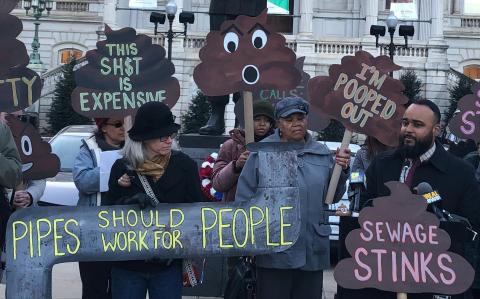
In a plan out for public comment this month, Baltimore City DPW is sidestepping its requirements to analyze and prevent sewage backups into people's homes in Baltimore. Submit your public comment against this plan today!
Baltimore City is under a Modified Consent Decree, signed in 2017, that outlines how the City is supposed to repair and improve our sewer system to prevent sewage overflows into our waterways and sewage backups into our homes by 2031. It's already been extended once: the original agreement signed in 2002 required the City to finish the work by 2016, but that deadline was not met. The updated agreement negotiated in 2017 required for the first time the City to address sewage backups into homes: by starting a dedicated reimbursement program for certain types of sewage backups, and by developing a Phase II plan in which the City would prioritize repair work to "address any remaining Collection System deficiencies that contribute to Building Backups."
That Phase II plan is out for public comment right now (read it here) - and Baltimore City DPW is sidestepping that requirement. Instead of containing any anyalsis of the problem or outlining where and why building backups are occurring and making a plan to prevent them, DPW just wrote:
"Since there are no known/identified deficiencies that contribute to building backups, the above criteria and prioritization scheme do not consider preventing building backups."
This makes a mockery of the hard-won improvements to the Modified Consent Decree that communities fought for in 2016 - and that's not all. The Phase II Plan also proposes delaying the City's deadline for completing the required improvements to the sewer system from 2030 to 2046, with many other issues throughout. And meanwhile, despite City Council action, Mayor Scott has still failed to expand Baltimore's Sewage Onsite Assistance program to equitably apply to all residents with sewage backups caused by City-owned infrastructure, as EPA and MDE ordered two and a half years ago.
Meanwhile, Baltimore households continue to face sewer backups caused by issues in City-owned, City-maintained infrastructure, but almost always without help from the City to deal with the consequences:
Year | Number of sewage backups | Link to heatmap of sewage backups |
2022 | 2,166 | https://cleanwater.org/baltimore-city-sewer-backups-2022.html |
2023 | 1,956 | https://cleanwater.org/baltimore-city-sewer-backups-2023.html |
2024 | 1,452 | https://cleanwater.org/baltimore-city-sewer-backups-2024.html |
Take action today! Submit an official public comment on the Phase II Plan to demand that Baltimore City fulfill its requirements for sewage backups.
For more information about issues in the Phase II Plan as a whole, please see analysis from Blue Water Baltimore here.