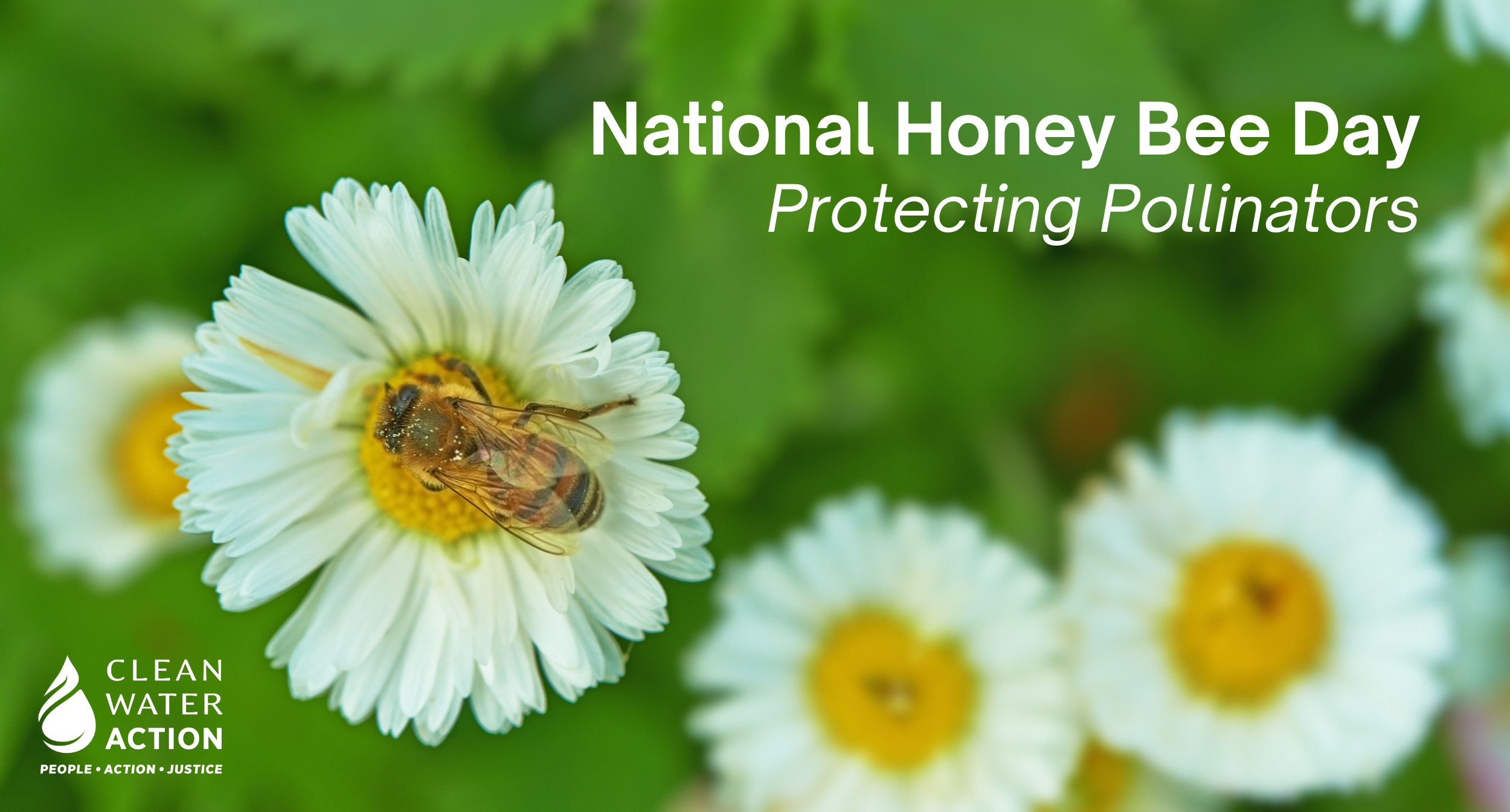
August 15 is National Honey Bee Day, a chance to celebrate one of the smallest workers with one of the biggest jobs in our food system. From Minnesota’s farms and orchards to backyard gardens, bees help pollinate the plants we depend on and support the ecosystems around us. But Minnesota’s bees are facing growing threats to their survival. Protecting them means paying attention to all of these threats, including the chemicals we put into the landscapes where they live and forage.
Honey bees are America’s primary commercial pollinator. In Minnesota, they are the most important pollinators for many fruits and crops, including apples, blueberries, cucumbers, pumpkins, raspberries, and squash. Without adequate pollination, these crops may produce fewer fruits, or fruits that are smaller or misshapen. Minnesota's prairies, forests, and wetlands also depend on the pollinators that visit them.

But Minnesota's bees are under pressure from almost every direction. Habitat loss and degradation, pesticides, climate change, disease, parasites, invasive species, and other environmental changes are making it harder for pollinators to survive. The Minnesota DNR identifies many of these as major challenges facing the state's pollinators, and Minnesota is home to more than 500 species of native bees whose health is tied closely to the health of our ecosystems.
Pesticides are one piece of this larger problem. Different pesticides affect bees in different ways, and the risk depends on the chemical, the dose, when it is applied, and how bees encounter it. Bees don't stay neatly inside the boundaries of a field, and neither does every pesticide application. Spray drift can carry pesticides beyond their intended application area, potentially exposing plants, wildlife, waterways, and people outside the field being treated. EPA specifically considers spray drift when evaluating ecological risks from pesticides. This is where our work on paraquat comes into the picture.
Paraquat is an herbicide used to control weeds and grasses and to desiccate some crops before harvest. It is also one of the most acutely toxic pesticides still used in the United States. The human health risks alone make paraquat a serious concern. The U.S. Environmental Protection Agency classifies paraquat as highly toxic and warns that ingesting even a small amount can be fatal. There is no antidote for paraquat poisoning. Additionally, long term exposure has been linked to an increased risk of developing Parkison’s disease by up to 50%. Paraquat can also move beyond its intended application area through spray drift. This creates potential for pollinator exposure. EPA's ecological risk assessment for paraquat identified potential risks to several groups of organisms, including birds, mammals, plants, and pollinators.
Over the past year, we spent hours researching paraquat, working with state agencies and agricultural stakeholders, developing educational materials, talking with communities and helping build support for the legislation to ban the sale and use of paraquat in Minnesota. It’s not always the most glamorous work, but it adds up to real change.

We are fighting for agricultural systems that allow farmers to grow food while protecting the people who work in those systems and the ecosystems surrounding them. We need strong protections against pesticide exposure. And when a highly toxic chemical can be replaced with safer approaches, we should be willing to make that change. Banning paraquat will not solve all challenges honey bees face today. No single pesticide or policy can do that. Protecting pollinators will require action on habitat, disease, nutrition, climate pressures, and pesticide exposure together. But reducing unnecessary exposure to highly toxic chemicals is a meaningful part of that work.
Bees remind us how connected our environmental decisions are. The food we eat, the chemicals we use, the water we protect, and the habitats we preserve all influence the health of the ecosystems around us. This National Honey Bee Day, I hope we celebrate honey bees by thinking about what they need from us, not just a garden full of flowers, but an environment where they can safely live and forage.
At Clean Water Action, we are working with communities and policymakers to reduce exposure to toxic chemicals like paraquat and advance policies that protect our health, water and environment. Your support helps make that work possible. A donation helps us continue researching dangerous chemicals, building coalitions, educating communities, and pushing for stronger protections at the state level. This National Honey Bee Day, consider making a generous gift to help us keep fighting for a healthier environment for pollinators, wildlife, and all of us.