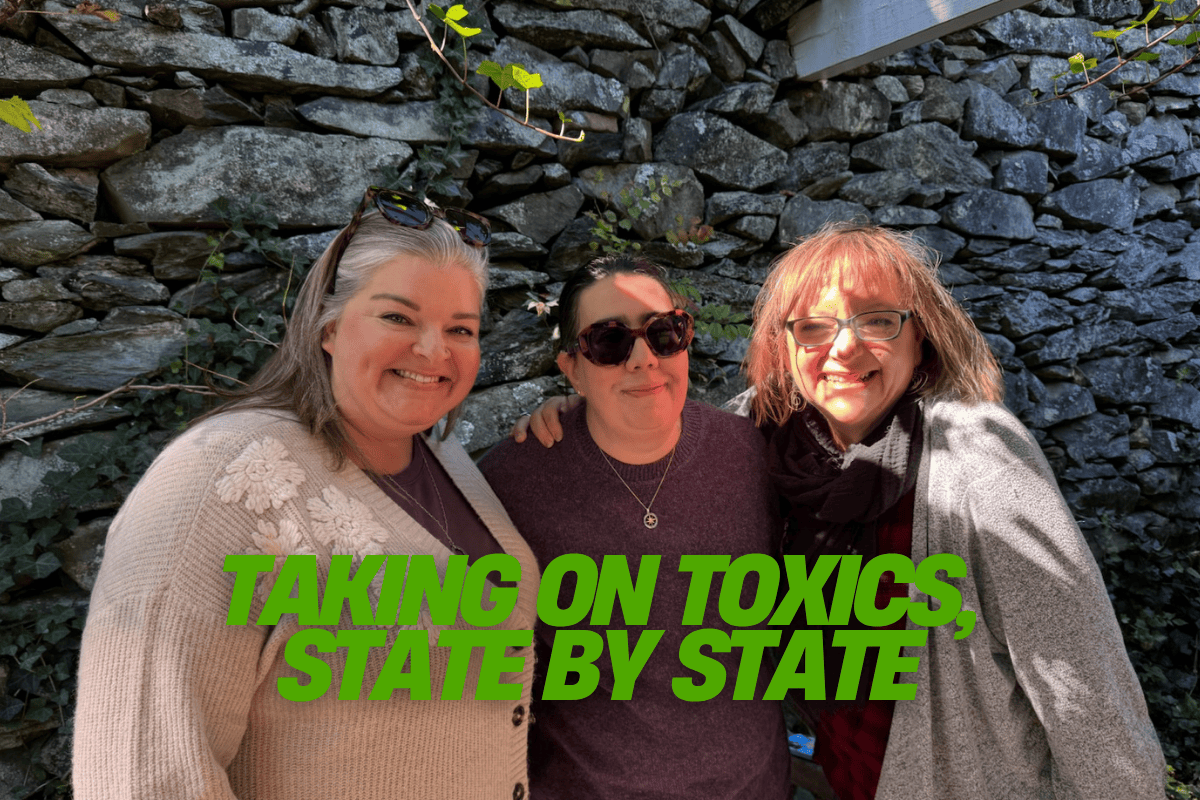
Many of the environmental laws and protections that we now take for granted originated at the state level. This is the guiding ethos of the annual Safer States conference. Activists from across the country gathered recently to organize, share strategies, and collaborate on a coordinated effort to defend Americans from toxic threats. We don’t have to wait for the end of the Trump Administration to protect our water and our health. The states can lead the way with proactive policies now.
Rhode Island has been a recent leader in toxics policy, joining a growing list of states including many New England states, that have banned toxic PFAS from common products. And the market has noticed. Companies like Levi Strauss & Co and Patagonia are voluntarily announcing plans to remove PFAS from their product lines in order to meet the new state standards. At the Safer States conference, activists shared how they are organizing to defend these new health protections from industry lobbying efforts to weaken them.
But we aren’t satisfied with simply defending our wins in Rhode Island. There are still other known health-harming substances in many products, from microplastics to heavy metals to formaldehyde.
What kinds of harms are we talking about? Microplastics can infiltrate virtually every part of the human body and impact many bodily systems causing problems including gastrointestinal and respiratory inflammation, endocrine disruption, and reproductive harms. And personal care products contaminated with toxic substances can lead to problems ranging from allergic rashes to cancers. As long as we keep manufacturing products with toxic substances, toxics will continue to enter our waterways and our bodies with disproportionate harm coming to the frontline neighborhoods where products are manufactured and disposed of.
In the upcoming 2026 Rhode Island legislative session, Clean Water Action will be advocating for legislation to ban intentionally added microplastics from products as well as legislation to ban specific health-harming substances from personal care products. Microplastic bits, lead, arsenic, and toxic chemicals don’t belong on, or in, our bodies. You can help! Send a message to your RI state legislators now!
Rhode Island shouldn’t wait for the federal government to protect our health from toxic threats.