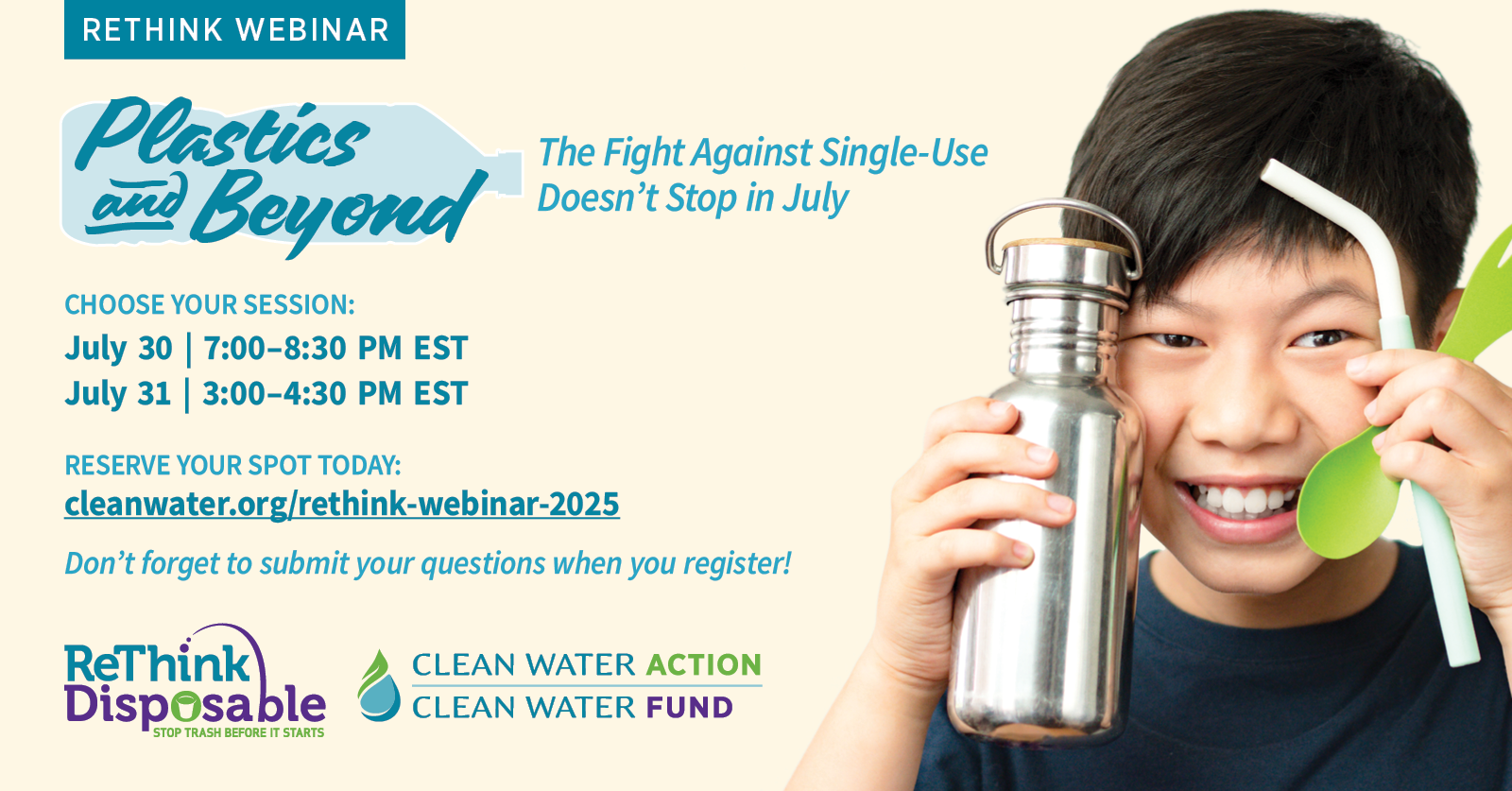
We're Celebrating Plastic Free July - REGISTER TODAY for our ReThink Disposable Webinar to learn more about our work!
K-12 students spend half their year in school, with up to 60% of students choosing school-provided lunch options. Pre-K and daycare kids are in these educational settings year-round. Unfortunately, many schools serve meals on disposable cafeteria foodware such as polystyrene foam trays and plastic utensils. There are over 16,000 chemicals known to be involved in the production of plastic; more than 3,200 are “chemicals of concern” and include highly toxic carcinogens, neurotoxicants, and endocrine disruptors. Using plastics, especially polystyrene, means toxic chemicals are leaching into the food children eat and subsequently entering their bodies. Since plastic does not decompose, but instead breaks down into micro- and nano plastics, microplastics have been found in various human organs and even within our blood. The use of plastic foodware increases the direct consumption of microplastics and related health risks. Reducing the use of “Styrofoam” trays and plastic utensils reduces children’s exposure to toxic chemicals and microplastics.
Georgetown Public Schools, located in Georgetown, Massachusetts, serves approximately 1,000 students between Penn Brook Elementary and Georgetown Middle/High School. Our Rethink Specialist worked closely with the district, and thanks to a generous donation from Plastic Free Restaurants, the schools’ polystyrene (foam) lunch trays were traded for Ahimsa stainless-steel reusable trays for a soft launch the last week of the 2024/2025 school year. The district will roll out the program at full speed this fall and will work with our specialist to begin incorporating food share tables, composting, and reusable utensils to transform the cafeteria into a zero-waste success story.
Similarly in California, San Francisco Office of the Environment (SFE) reached out to see if ReThink Disposable could help them to convert and source reusable foodware in their licensed, Spanish speaking daycare facilities. Since then, our ReThink Disposable Specialists have converted 41 schools, which represent 4% of the total licensed childcare facilities in the city. The interest in participation in the ReThink program and overall enjoyment of the products by the preschool and daycare leaders - as well as the kids - was inspiring.
Municipalities, schools, and taxpayers also benefit from financial savings by eliminating single-use plastic cafeteria foodware and replacing it with safe, reusable alternatives. Continuously purchasing disposable products costs more over the course of a year than purchasing reusable trays and utensils. In Connecticut, the Middletown Public School District no longer need to purchase the 3.76 million disposable items a year they previously required. They recouped their upfront cost of purchasing reusables in just 3.8 months and benefited from net annual savings of $91,175. Eliminating disposables also reduces the overall amount of waste the school produces, allowing for fewer waste collection pickups, and reducing costs even further. Annually, they are estimated to reduce their waste output by 15.5 tons. That means the district can save an additional $41,866.50 by eliminating one waste pick up per week for each school.
Our ReThink Disposable team was excited to work on these projects. We are always happy to reduce single-use foodware wherever possible, but most importantly, in the places that most impact our youth.
We hope you can join us for a webinar to discuss the impact plastic reduction, and the reuse economy, is making in our communities. We will be joined by some of our collaborators for a robust roundtable discussion on the future of the movement. We hope to see you there! REGISTER HERE!