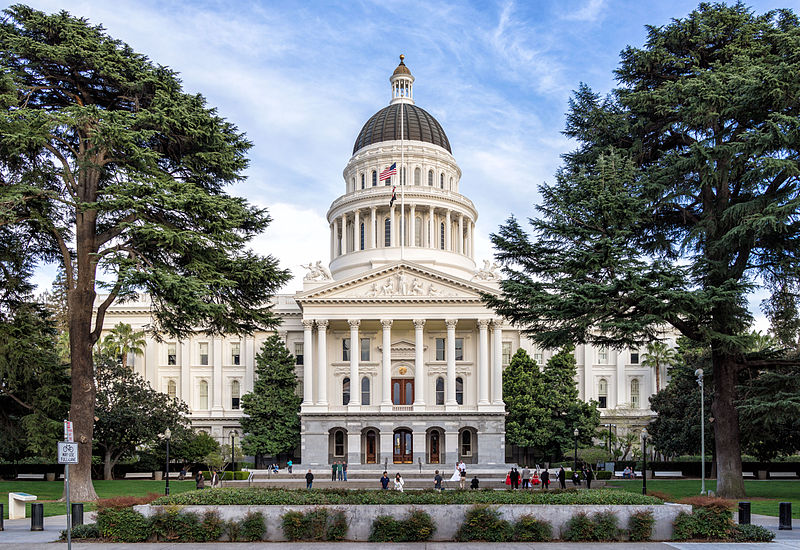
Each year, the Clean Water Action team analyzes hundreds of bills moving through the state legislature and engages with bill authors and allies to either support those that will benefit California and its residents or help to stop those initiatives that would weaken our environmental and public health protections. The organization also sponsors bills, working with legislative champions to write and pass bills that will promote clean water and equitable access for all Californians, stop the use of toxic chemicals in the products we use so they don’t enter the environment, protect the largely low-income BIPOC communities located next to oil and gas extraction, and reduce waste and plastic proliferation.
In 2025, Clean Water Action sponsored four groundbreaking bills to restrict the continued use of super-toxic chemicals before they enter our water and bodies, and to ensure that all Californians have access to clean, affordable water. Two made it through the state legislature, but were regrettably vetoed by the Governor as he moved away from his traditional pro-environment position.
In addition to the bill process, the legislature oversees budget appropriations, and we worked to ensure the speedy appropriation of bond dollars from Proposition 4, approved by voters last November.
Also during this session, the Governor and Legislature negotiated an extension of California’s Cap & Trade program—which has been renamed the “Cap and Invest” program. The sale of emissions credits through this program fund the Greenhouse Gas Reduction Fund, of which a small portion (less than 5%) goes to the Safe and Affordable Drinking Water Fund, also known as SAFER. The extension of the Cap and Invest program, approved by the legislature on the last day of the 2025 session, extended the life of the SAFER Program from 2030 to 2045, which will result in an additional $2 billion going towards drinking water solutions for California’s public water systems.
Updated October 2025.
SB 682 (Allen) Phasing Out Unnecessary Uses of PFAS "Forever Chemicals"
To protect people and the environment from the PFAS crisis, sources of PFAS pollution must be reduced as quickly as possible. SB 682 represented an important step in that effort. While the state legislature balked at taking the bold step of banning PFAS in all unnecessary uses (as has been done in Minnesota), the bill would still have a significant impact by banning these toxic “forever” chemicals in some of their biggest uses: cookware, cleaning products, ski wax, juvenile products, and dental floss, and non-paper food packaging (we’ve already banned their use in paper food packaging).
When the bill went to the Governor in October, only the cookware industry opposed it, as part of a well-funded national campaign to stop the further proliferation of such bans (six states have already banned PFAS in cookware). It is regrettable that the Governor repeated a false assertion right out of the industry’s playbook when he wrote in his veto message that he was worried about the cost of PFAS-free alternatives. The Governor had, in fact, been given extensive data collected from both online shopping sites and physical stores that non-PFAS alternatives to cookware are readily available at the same cost as the toxic types.
Clean Water Action co-sponsored SB 682 with Breast Cancer Prevention Partners, the California Association of Sanitation Agencies, the Environmental Working Group, and the Natural Resources Defense Council.
Despite the Governor’s actions, Senator Ben Allen and Assemblymember Tasha Boerner, who authored SB 682 and AB 823 respectfully, deserve praise for being such strong leaders on PFAS and plastics. Please send them a message today, thanking them for their bills and asking them to continue to fight for California’s environmental future. The letters will also be cc’d to the Governor.
AB 823 (Boerner) Protecting Californians From Toxic Microplastics
AB 823 would have banned the sale of non-rinse off personal care products and cleaning products containing microplastics and plastic glitter. Microplastics absorb toxic chemicals and bioaccumulate in the food chain, endangering ecosystems and public health. Microplastics have been found in lungs, the bloodstream, placental tissues, breast milk, and even the brain, raising serious health concerns, such as dementia, hormone disruption, infertility, and cancer affecting the lungs, blood, breasts, prostate, and ovaries. Despite these serious concerns, microplastics continue to be added to products as abrasives, to release fragrance, or for other avoidable purposes. AB 823 built on a previous bill (AB 888, 2015) co-sponsored by Clean Water Action that banned plastic microbeads in rinse-off personal care products; AB 823 would have expanded the number of plastic pollution sources that would be restricted, leading companies to use readily available natural substitutes.
The bill passed through the state legislature with bi-partisan support and no opposition. However, the Governor inexplicably vetoed it, saying that restricting plastics may also inadvertently restrict the use of safer, natural alternatives. In fact, the bill was crafted in order to ensure that those substitutes would be used.
Clean Water Action co-sponsored AB 823 with Californians Against Waste, the 5 Gyres Institute and Breast Cancer Prevention Partners.
Despite the Governor’s actions, Senator Ben Allen and Assemblymember Tasha Boerner, who authored SB 682 and AB 823 respectfully, deserve praise for being such strong leaders on PFAS and plastics. Please send them a message today, thanking them for their bills and asking them to continue to fight for California’s environmental future. The letters will also be cc’d to the Governor.
AB 794 (Gabriel) Keep PFAS out of California Drinking Water
AB 794 would ensure that Californians are protected from PFAS chemicals in our drinking water. An estimated 25 million Californians have some level of PFAS in their drinking water supplies. Given that this class of chemicals has been associated with a wide range of health issues at very low levels, including cancers, reproductive harm, impaired immunity, high cholesterol, liver damage, cardiovascular diseases, and developmental issues in infants and children, U.S. EPA established drinking water standards for 6 of the most commonly found versions in 2024.
Not surprisingly, Trump Administration officials have since proposed rescinding and/or weakening the standards. AB 794 addresses this threat by directing the State Water Board to adopt an emergency regulation mirroring the national 2024 regulation from EPA. The bill moved through its Assembly policy committees but is now a “2-year bill” as we work with the Assembly Appropriations Committee on funding details. As such, the bill must be voted out of the Assembly by the end of January 2026.
Clean Water Action is co-sponsoring AB 794 with the Environmental Working Group.
SB 350 (Durazo) Public Water Systems: Low-Income Water Rate Assistance
SB 350 would have established a first-in-the-nation statewide water rate assistance program for low-income residential customers served by public drinking water and wastewater systems. Access to safe, clean, and affordable water is a human right and essential to public health. The State Water Resources Control Board (SWB) has reported that water rates rose 45% from 2007 to 2015 and a 2025 industry study found that rates have increased over 24% in the past 5 years. The result is that an estimated 28% of households cannot pay their water bills and are threatened with shut offs. While the bill did not advance this year due to state budgetary constraints, Clean Water Action and its allies have established a strong coalition of support, including water agencies who are committed to seek funding remedies.
Clean Water Action is co-sponsoring SB 350 with Community Water Center and Leadership Counsel for Justice and Accountability.
